Goat Record Keeping Log Book: The Essential Farm Management Tool
Managing a goat herd requires more than just daily feeding and watering. Whether you're running a commercial dairy operation, breeding show-quality animals, or simply maintaining a small backyard flock, accurate record keeping forms the backbone of successful livestock management. The Goat Record Keeping Log Book offers a structured, practical solution designed specifically for goat owners who want to track every aspect of their animals' health, productivity, and development without the hassle of creating spreadsheets from scratch.
Why Every Goat Owner Needs a Dedicated Record System
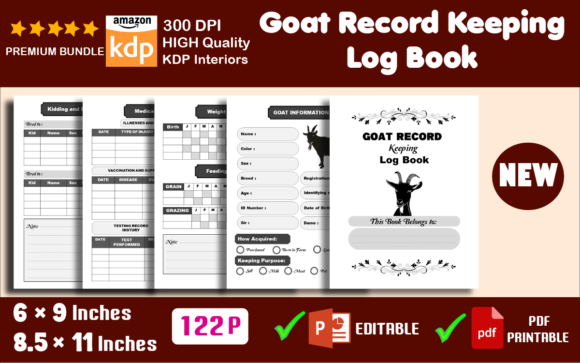
Scattered notes on random scraps of paper don't cut it when you're trying to monitor weight gain patterns, track breeding cycles, or document vaccination schedules. A well-organized Goat Record Keeping Log Book centralizes all critical information in one accessible place. This particular log book spans 122 pages, providing ample space to document everything from individual goat profiles to long-term health histories. The dimensions come in two practical sizes—8.5" x 11" for detailed desk reference and 6" x 9" for portability around the barn or pasture.
What makes this record book genuinely useful is its purpose-built layout. Rather than generic blank pages, each section addresses a specific aspect of goat management. You'll find dedicated pages for goat information, weight tracking, feeding records, and detailed medical documentation. This isn't a one-size-fits-all livestock journal—it's tailored specifically to the rhythms and requirements of goat husbandry.
Inside the Pages: What You Actually Get
The Goat Record Keeping Log Book breaks down into several key sections, each designed to capture vital data points that matter in real-world farm management.
Goat Information Page serves as the foundation. Here you record each animal's name, breed, date of birth, identification numbers, parentage, and acquisition details. Think of it as a birth certificate and profile sheet rolled into one. When you're managing multiple animals across several years, having quick access to these basics saves enormous amounts of time.
Weight Tracker pages let you monitor growth rates and body condition over time. For breeders focused on meat production, weight data directly influences feeding adjustments and breeding decisions. Dairy goat owners also benefit from tracking weight alongside milk production to ensure animals maintain healthy body condition during lactation.
Feeding Record sections capture what goes into each animal daily. Feed types, quantities, supplements, and any dietary changes get logged systematically. This becomes invaluable when troubleshooting health issues or optimizing feed conversion ratios. Nutrition directly impacts everything from milk quality to reproductive performance, making this section one of the most frequently referenced.
Kidding and Breeding Record pages address perhaps the most critical aspect of herd management. Tracking breeding dates, buck information, gestation periods, kidding details, and kid survival rates gives you the data needed to make informed genetic decisions. Experienced breeders know that patterns emerge over multiple kidding seasons—patterns you can only identify with consistent documentation.
Medical Goat Record, Illnesses and Injuries History, Vaccination and Supplement History Record, Testings Record, and Parasite Control Record collectively form the health documentation suite. Veterinary visits, medication dosages, treatment outcomes, fecal egg counts, CD&T vaccinations, deworming protocols, and disease testing results all find their proper home here. For anyone who has ever tried to recall when exactly a goat received its last CDT booster or which dewormer was used three months ago, these pages eliminate the guesswork entirely.
Practical Design Choices That Matter
The layout prioritizes functionality over decoration. Clean lines, logical spacing, and clearly labeled fields make data entry straightforward—even when you're writing with cold hands in a poorly lit barn. The pages avoid unnecessary ornamentation that would waste space or distract from the information being recorded.
This log book has been tested on Amazon KDP with no bleed issues, ensuring clean printing whether you order a single copy or multiple units for different properties or co-managers. The PDF format arrives print-ready, while the PowerPoint version offers editability for those who want to customize fields or adjust layouts to match their specific operational needs. Four JPEG-format pages are also included for quick digital reference or integration into other management systems.
The Goat Record Keeping Log Book functions as both a practical reference tool and a historical archive. Years from now, you'll be able to look back at production trends, health patterns, and breeding outcomes that inform better decisions going forward. This kind of institutional knowledge, captured systematically, separates casual hobbyists from serious, successful goat managers.
Beyond Basic Record Keeping
Solid documentation also supports legal compliance, particularly for commercial operations subject to health inspection requirements, organic certification standards, or breed registry paperwork. Having organized, detailed records readily available demonstrates professionalism and accountability to regulators, buyers, and fellow breeders alike.
For small business owners selling goat milk products, cheese, fiber, or breeding stock, this log book becomes part of your operational infrastructure. It supports quality assurance processes, helps identify cost centers, and provides the data backbone for business planning. Entrepreneurs in the agricultural space understand that what gets measured gets managed—and what gets managed gets profitable.
Whether you're a first-time goat owner building your management system from the ground up or a seasoned breeder looking for a more organized approach, the Goat Record Keeping Log Book delivers the structure and space you need. Its straightforward design respects your time while ensuring nothing important slips through the cracks. Good record keeping doesn't have to be complicated—it just has to be consistent, and having the right tool makes consistency far easier to maintain.